
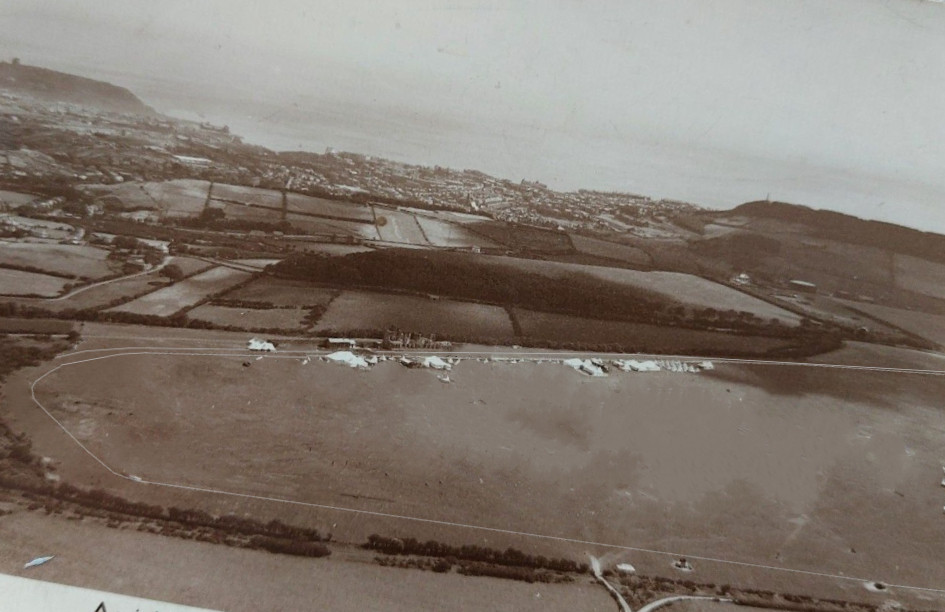
Seamer Moor, situated near Scarborough in North Yorkshire, boasts a storied history as a venue for horse racing. The earliest recorded races on the moor date back to 1758, continuing annually until 1789. These events were significant social occasions, attracting a diverse audience ranging from local gentry and landowners to farmers and townspeople. The races not only provided entertainment but also served as a platform for socializing and conducting business… (continued)


The races themselves were typical of the period, featuring match races and sweepstakes over varying distances. Notably, in 1789, a match race was held between a black gelding owned by Captain Casebourne and another horse over half a mile on Scarborough’s beach, indicating the popularity and adaptability of racing in the region.
Prominent figures in the racing community, such as jockey John Shepherd, were known for their skill in four-mile heats during this era. While there is no direct evidence linking Shepherd to races at Seamer Moor, his prominence highlights the level of competition and the caliber of participants in Yorkshire’s racing scene at the time.ments or dissatisfaction among stakeholders . In 1867, efforts were made to revive horse racing in the area with the formation of a new race company, capitalized at £2,000, aiming to reestablish Seamer Moor as a prominent racing venue. Although the final Flat race meeting was on Saturday 26th August 1893, National Hunt racing continued to be staged until the final meeting on Saturday 18th May 1907.
Today, the site of the former racecourse has undergone significant transformation. The area, once known for its equestrian events, has been repurposed for residential development. Specifically, land to the south of Racecourse Road in East Ayton, encompassing part of the historic racecourse, has been allocated for housing. A planning application was approved for the construction of 93 dwellings, including associated infrastructure such as access roads, parking, and open spaces .
While the physical remnants of the racecourse have largely disappeared, the legacy of Seamer Moor’s equestrian past remains an integral part of the local heritage. The transformation of the site reflects the evolving needs of the community, balancing the preservation of historical significance with contemporary development.