
History rarely announces itself. The moments that eventually reshape our institutions seldom arrive with fanfare or headlines proclaiming that everything has changed. More often they pass almost unnoticed, their significance recognised only years later when historians look back and realise they were witnessing the beginning of something new.
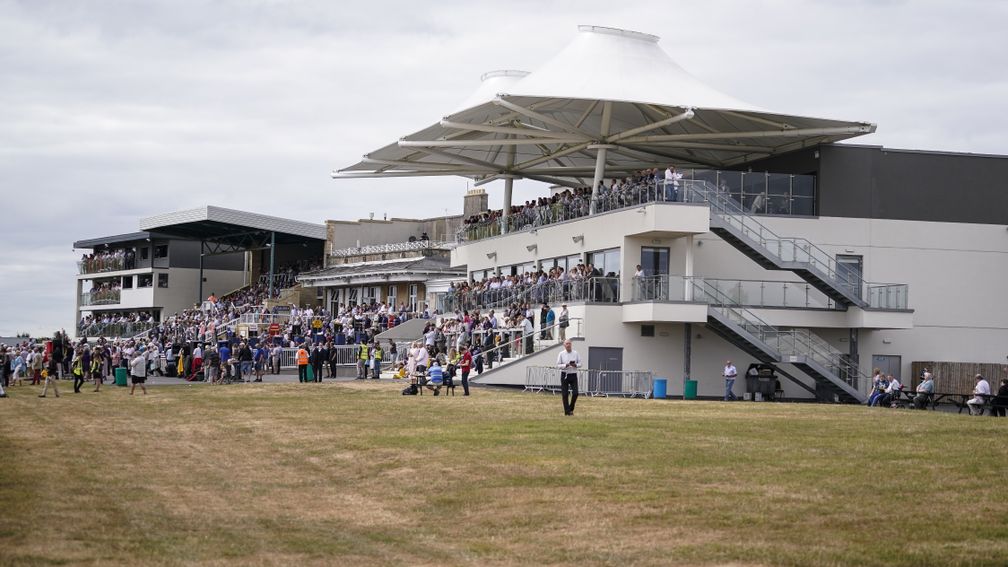
Perhaps June 2026 will become one of those moments. On the surface, nothing extraordinary happened. Four race meetings were abandoned as exceptionally high temperatures swept across parts of Britain. Others were rescheduled to begin much earlier in the day. The British Horseracing Authority implemented its Hot Weather Policy, putting welfare ahead of commercial considerations. Trainers adjusted their plans, racecourses accepted the inevitable and, within a matter of days, the sport will carry on much as it always has. The story will disappear almost as quickly as it arrived. Perhaps it shouldn’t. For what British racing experienced was not simply a heatwave. It was a glimpse of a future that may become increasingly familiar.
Whether one accepts every climate projection is, in many ways, beside the point. Racing is not concerned with politics; it is concerned with practicalities. The sport has always lived by the weather. Going descriptions determine tactics. Frost closes racecourses. Heavy rain changes entire seasons. Trainers, jockeys and owners understand better than most that success is often dictated by forces beyond human control. Now another force may be beginning to reshape the landscape.
The Met Office reports that the UK’s climate has already warmed significantly compared with the latter half of the twentieth century, while climate projections suggest that prolonged periods of temperatures exceeding 30°C are likely to become more frequent over the coming decades. No one can predict precisely how Britain’s weather will look in twenty years’ time, but few would argue that it will be identical to that of the 1980s. For a sport that depends so heavily upon the seasons, that ought to matter.
There is an important distinction between adapting to weather and adapting to climate. British racing has always coped remarkably well with the former. If frost threatens, inspections are held. If rain falls, the going changes. If temperatures become dangerously high, meetings can be delayed or abandoned. The BHA’s Hot Weather Policy has demonstrated exactly how such situations should be managed, and deserves considerable credit for placing welfare at the heart of its decision-making.
But emergency measures are, by definition, designed for exceptional circumstances. If exceptional circumstances begin to occur every summer, they cease to be exceptional at all. That is the point at which good governance begins to look beyond contingency plans and starts asking more fundamental questions. History suggests British racing has too often been afraid of asking them.
Many aspects of the modern fixture list that now appear timeless were once regarded as deeply controversial. Sunday racing was fiercely opposed. Floodlit all-weather racing was dismissed by traditionalists. Summer jumping, now accepted as an established part of the calendar, was once viewed as something of an experiment. Every generation assumes the sport has reached its final form. Every generation eventually discovers that it has not.
Change has never been the enemy of British racing. Stagnation has. That raises an intriguing possibility. Rather than simply preparing for the next heatwave, should the sport begin preparing for a hotter climate?
The question is not whether racing can survive higher temperatures. It almost certainly can. British racing has repeatedly demonstrated its resilience over centuries of political upheaval, economic uncertainty and changing public attitudes. The more interesting question is whether the fixture list we inherited was designed for the climate we are gradually moving towards.
If prolonged spells above 30°C become commonplace during July and August, does it still make sense to stage some of the busiest periods of both Flat and National Hunt racing at precisely that time? Might a planned midsummer break ultimately prove less disruptive than repeated emergency abandonments? Could the traditional afternoon programme gradually evolve towards morning fixtures during periods of extreme heat, allowing horses, riders, stable staff and spectators to avoid the most demanding conditions?
These are not revolutionary ideas. They are already commonplace elsewhere. Racing in Australia frequently adjusts race times to suit forecast temperatures. Hong Kong’s administrators continually monitor heat and humidity, while Dubai’s entire racing season exists because organisers accepted long ago that climate, rather than tradition, should determine when elite racing takes place. Britain has an advantage those jurisdictions did not. It has time.
Perhaps the greatest strength of British racing is that it rarely thinks only about next week. Racecourses are built to serve generations. Stallions are chosen with decades in mind. Breeding decisions echo through bloodlines for years. Fixture planning is measured not in months but in seasons. That long-term outlook is one of the sport’s greatest assets. Which is why now feels like the right moment to begin asking equally long-term questions.
One possibility might be greater regionalisation during periods of extreme heat. Horses travelling from North Yorkshire to Devon, or from Lambourn to Perth, spend hours on the road in conditions that place additional demands on both equine welfare and stable staff. A more regional fixture programme during the hottest weeks of the year could reduce journey times, lower transport costs and improve welfare without fundamentally changing the sport.
Morning racing offers another intriguing possibility. Recent experience has shown that high-quality fixtures can begin far earlier than tradition dictates. Television audiences are increasingly accustomed to live sport throughout the day, while racegoers may well welcome avoiding the hottest hours of the afternoon. What today feels unusual may, in time, come to feel entirely normal. None of these ideas require immediate action, but they need thought.
Good governance is not about making dramatic decisions before they become necessary. It is about recognising plausible futures early enough that change can be introduced gradually, thoughtfully and with the support of those it affects.
The British Horseracing Authority has already shown that it can respond effectively when extreme weather arrives. The next challenge may be deciding whether the racing calendar itself should begin responding before those weather events become routine.
Perhaps future summers will prove less demanding than many expect, and British racing will continue much as it has for generations. But history has a habit of rewarding those who recognise change while it is still unfolding, rather than after it has already happened. The four abandoned meetings of June 2026 may one day be remembered as little more than a historical footnote. Or they may come to represent the week British racing quietly looked into the future, and began to wonder whether the future was looking back.